 Piran
Piran travel guide
Things to do in Piran
Piran is the jewel of the Slovenian coast: a Venetian town on a narrow peninsula, with marble squares, steep lanes and the sea on three sides. Most of its best sights are outdoors and free. Here are the places worth your time, with the true stories behind them.
Updated November 2026 · history checked against museum and academic sources
The best sights in Piran
1. Tartini Square Free
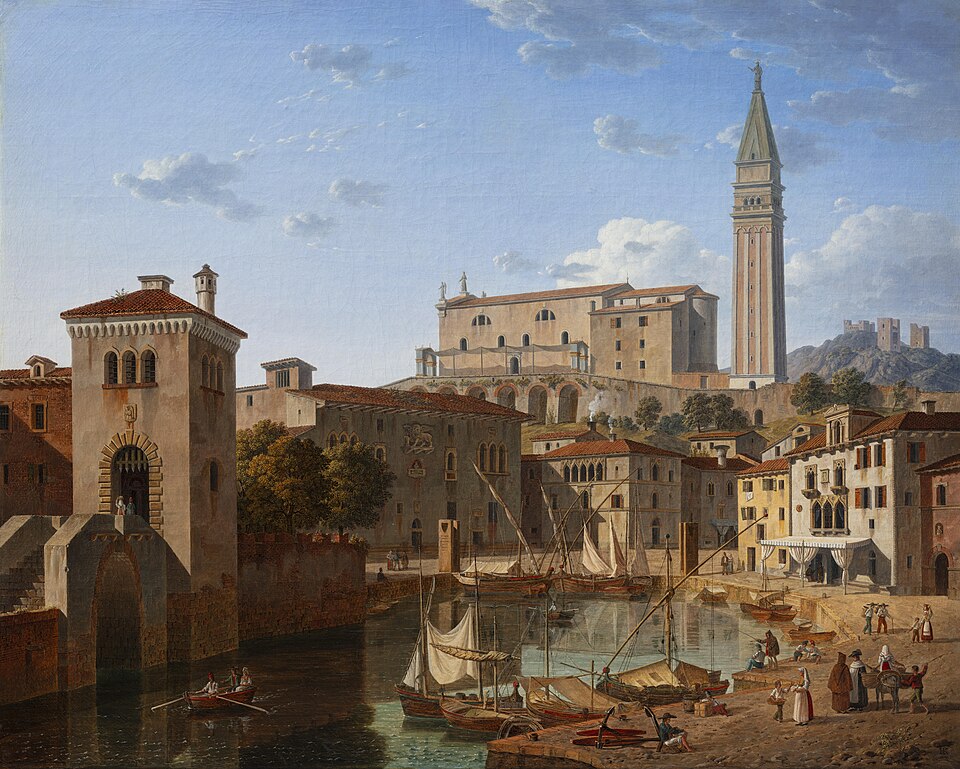
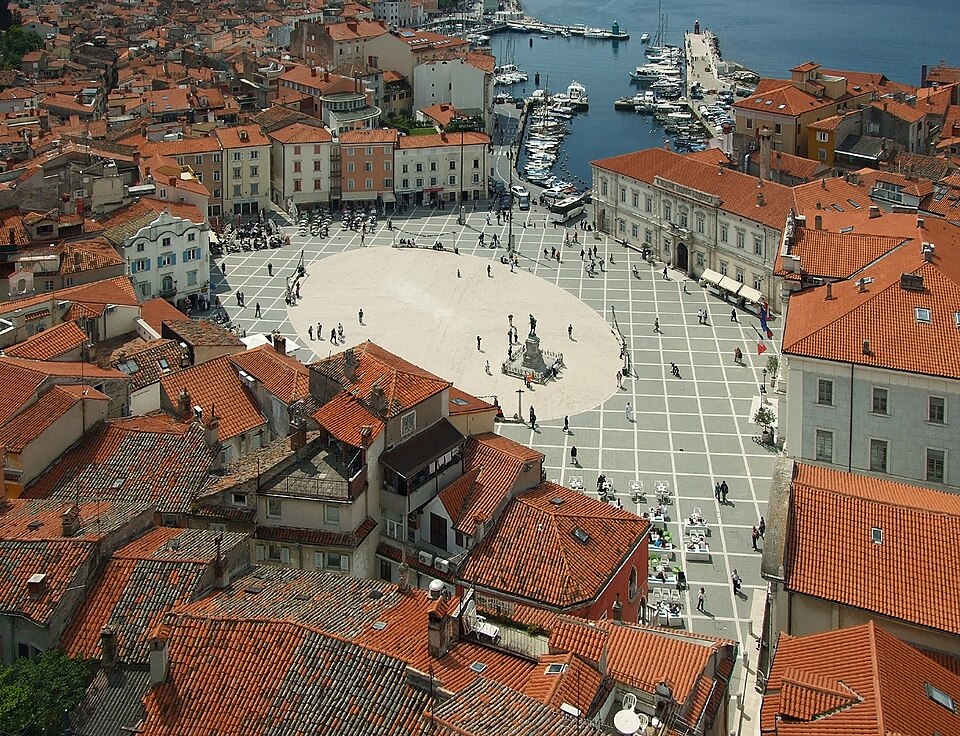
Piran’s oval main square was once its inner harbour. Boats moored here until 1894, when the harbour was filled in for hygiene and public space; the painting above shows it in 1831. In the middle stands the bronze statue of the violinist and composer Giuseppe Tartini, born in Piran in 1692. The statue by Antonio Dal Zotto was unveiled in 1896.
2. The Venetian House Free
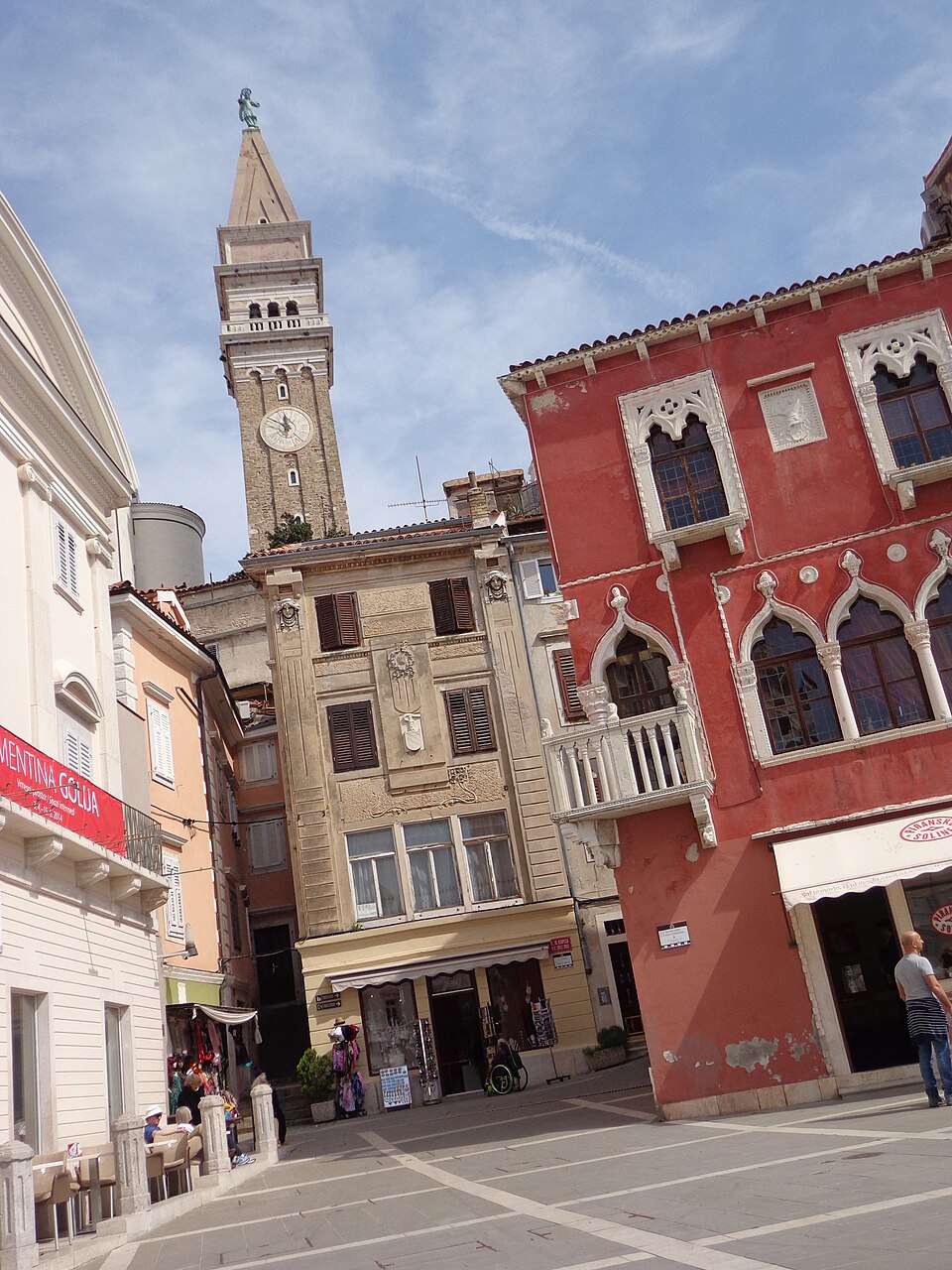
The red Venetian Gothic house on the corner of the square dates from the 15th century and is the oldest preserved house on Tartini Square. Look for the stone lion between the windows and the motto “Lassa pur dir” (“let them talk”). The legend says a Venetian merchant built it for a girl from Piran and answered the town’s gossip with these words.
3. The flagpole pillars and the town hall Free
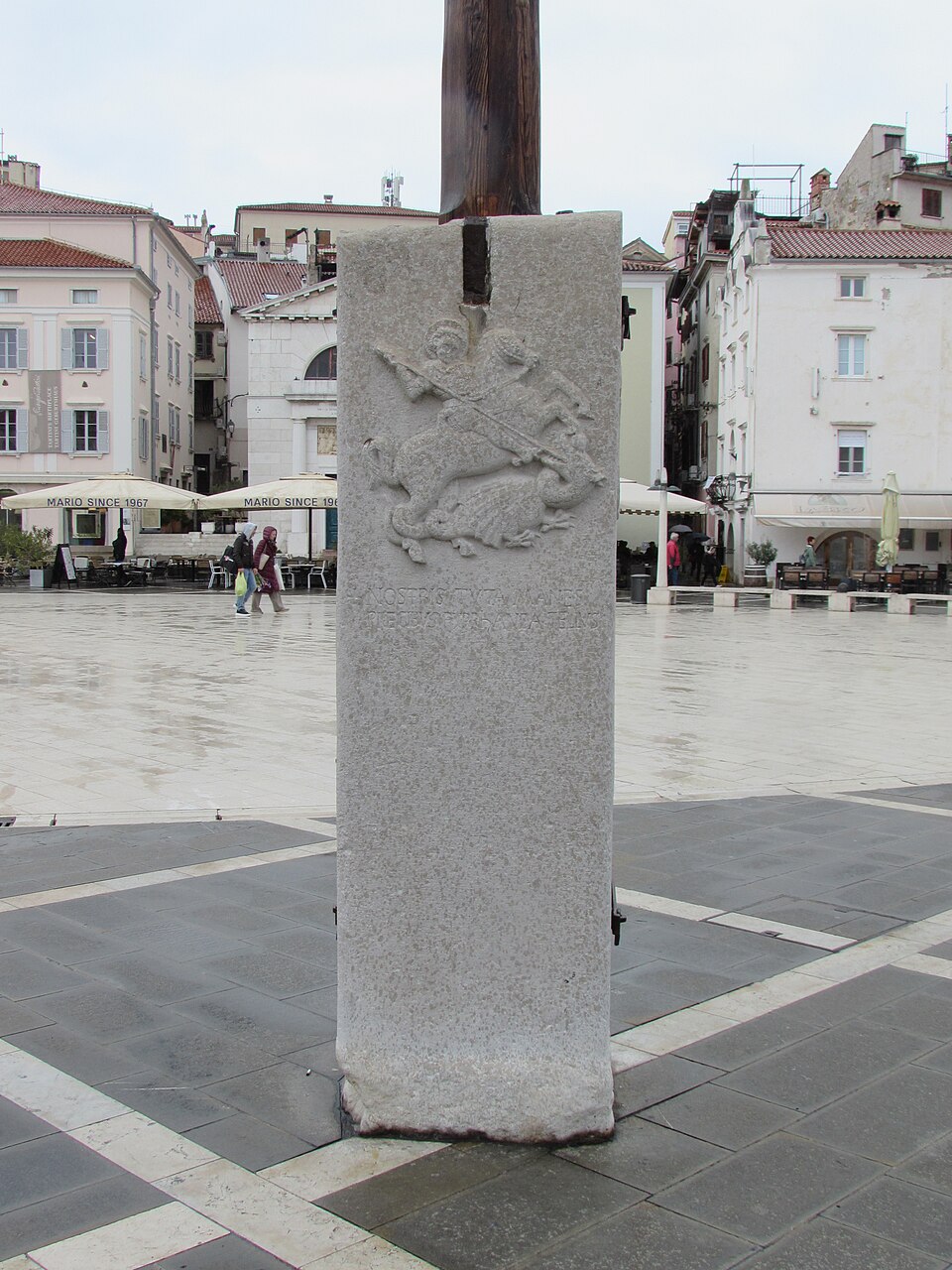
Two 15th-century stone pillars stand on the harbour side of the square. Look closely: one shows Piran’s patron St George on horseback killing the dragon, the other the winged lion of St Mark, symbol of Venice. Behind them, the town hall (1877–1879) carries another lion of St Mark with an open book, often read as a sign of peace.
4. St George’s Church and the bell tower Free
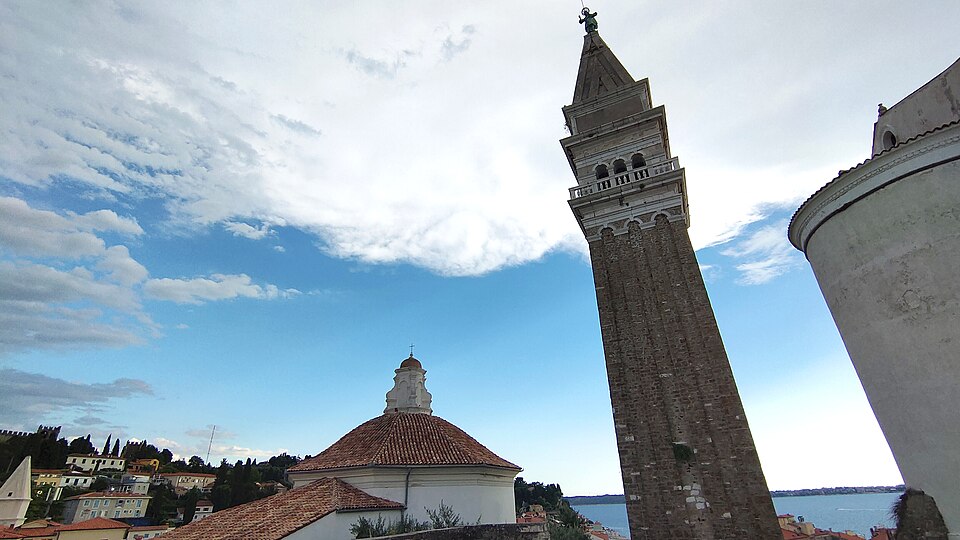
High above the town, St George’s Church was dedicated to the saint in 1344, after tradition says he saved Piran from a terrible storm. It was rebuilt from 1595, and its free-standing bell tower was modelled on St Mark’s campanile in Venice. On top, a 3.7 m copper statue of the Archangel Michael (1769) turns with the wind. The church terrace has one of the best views on the coast.
💡 Folk saying: when the angel faces Trieste, the sea is good; when it faces Piran, stay ashore.
5. The town walls Entry fee
The largest of Piran’s three rings of walls was built on Mogoron hill in the late 15th and early 16th century against the Ottoman threat. Seven gates and thirteen towers survive. Piran was never besieged by the Ottomans. You can see the walls from the lanes for free; walking on top of them has a small entry fee and gives a postcard view of the town.
6. The Minorite monastery Free
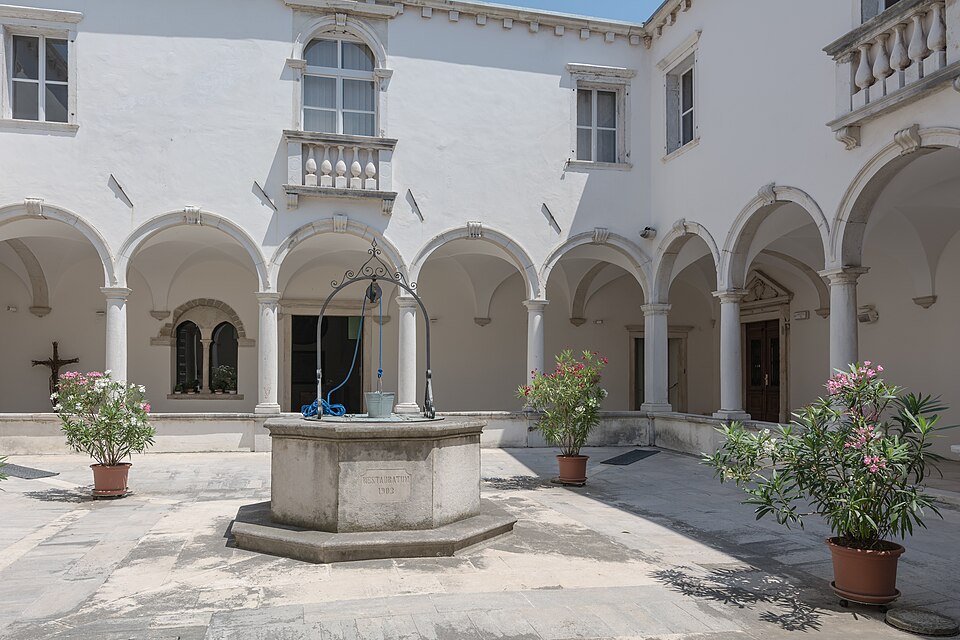
The monastery church of St Francis was built in the early 14th century. Its cloister, completed in 1735, is famous for its acoustics and hosts concerts. Inside the church hangs a 1518 painting by Vittore Carpaccio, Madonna Enthroned with Child and Six Saints.
7. The Old Square (Trg 1. maja) Free
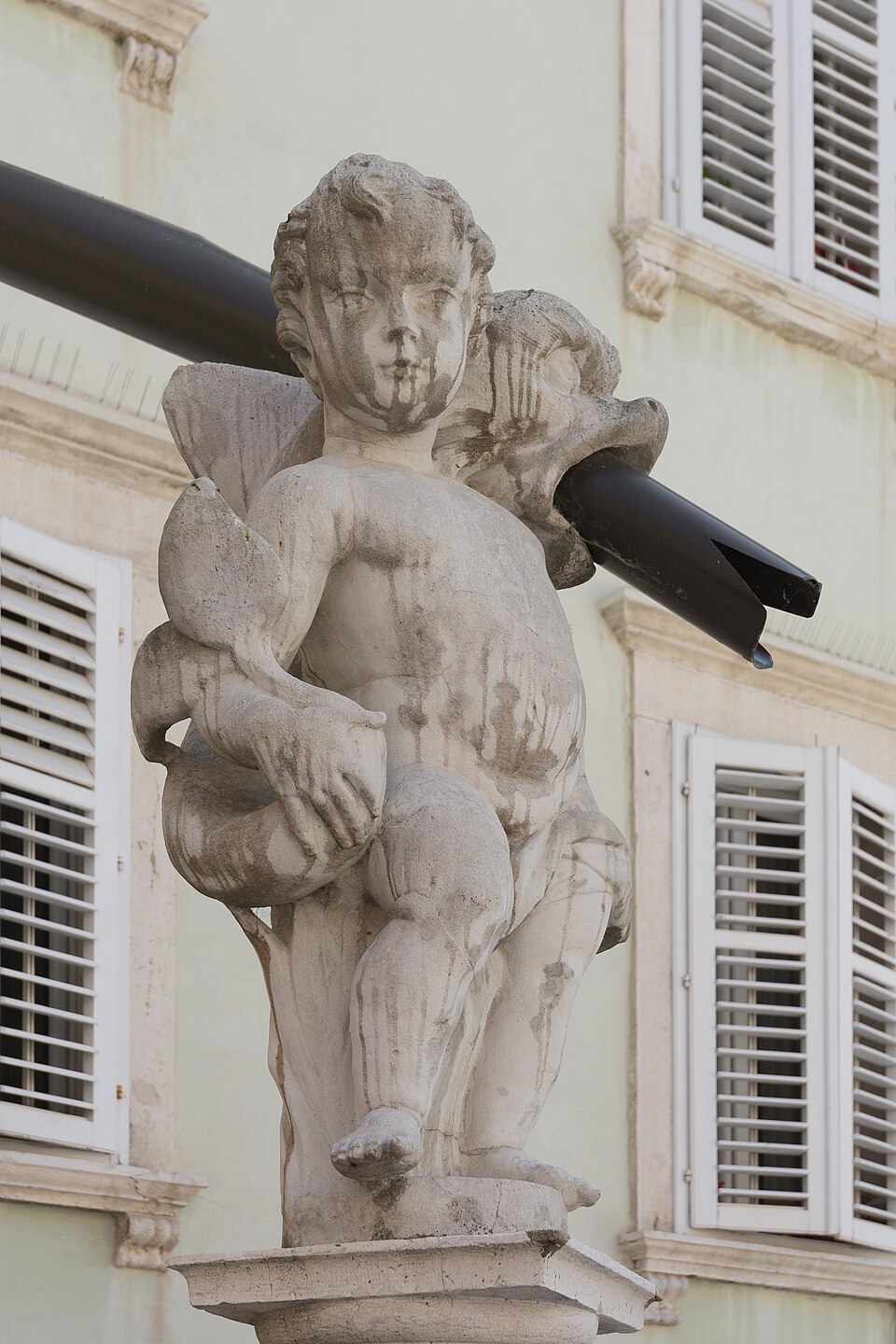
Before Tartini Square existed, this was Piran’s main square. After the drought of 1775 the town built a cistern here: rainwater from the roofs ran through gutters and was filtered through stone, sand and gravel. The 18th-century gutters still survive. Find the little stone putto holding a fish.
8. Punta and the lighthouse Free
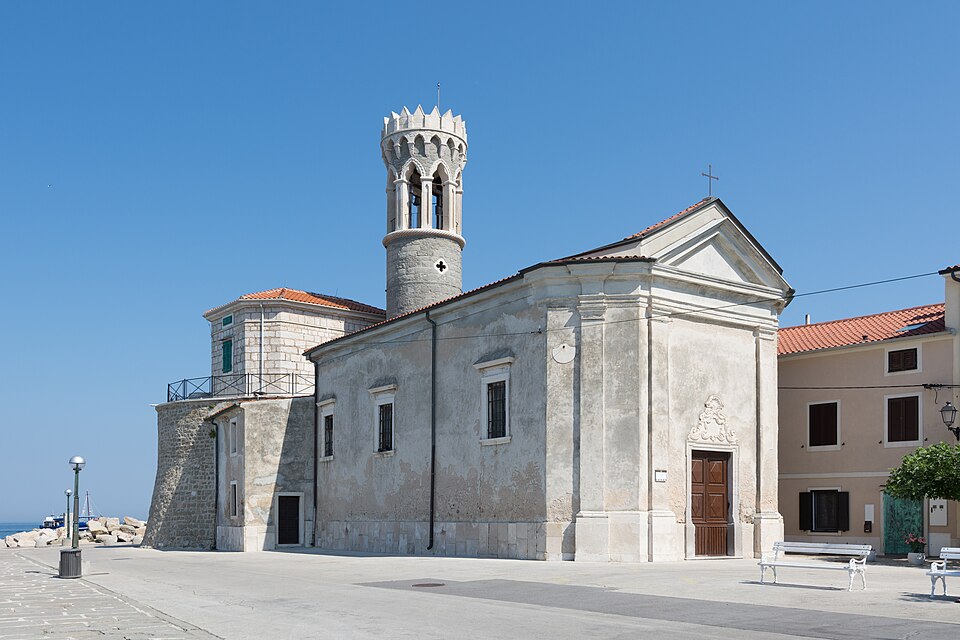
At the tip of the peninsula, the church at Punta with its round, battlemented bell tower stands where the church of St Clement was already recorded in 1274. Its bell dates from 1510. Sit on the rocks by the lighthouse and watch the sun set over the Gulf of Trieste.
9. The harbour promenade Free
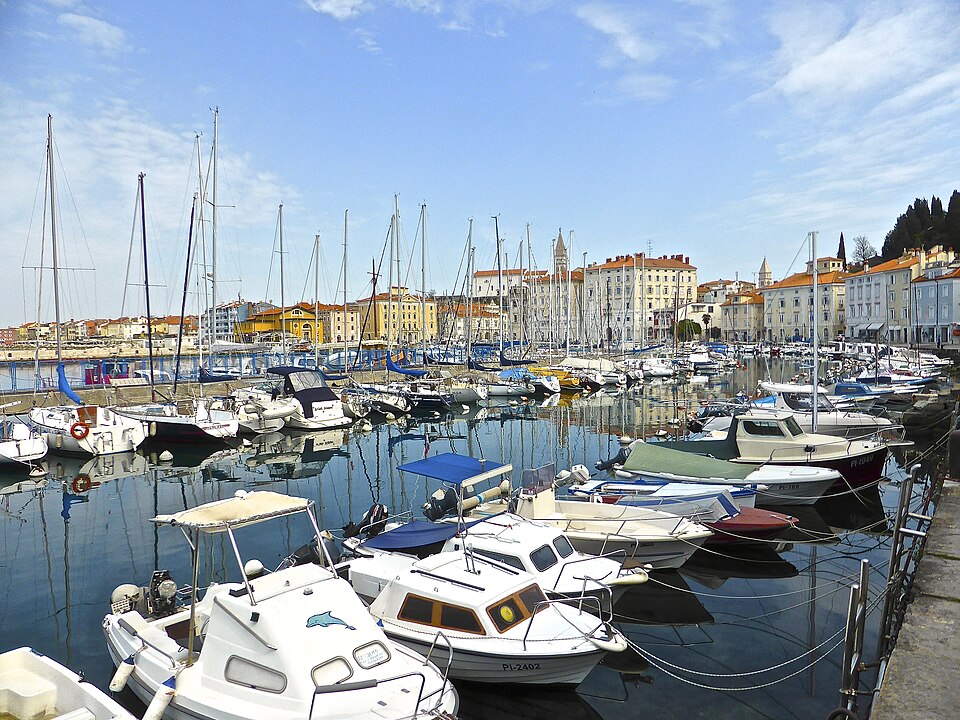
Walk the waterfront from Tartini Square to Punta. In Venetian times smugglers rowed salt out of Piran towards Trieste, and in the late 18th century Venice had only two slow patrol boats to stop them. Today it is the place for an ice cream, a swim from the rocks and the fishing boats.
10. Sečovlje salt pans Entry fee
Salt made Piran rich. Its salt pans were first recorded in 804, and from 1358 salt was made the Pag way: white salt crystallised on a living layer called petola, a method still used today. The Sečovlje salt pans, south of Portorož, have been a protected nature park since the early 1990s (entry fee). Buy a bag of Piran salt as the perfect souvenir.
11. Tartini House and the Maritime Museum Entry fee
For a rainy hour: Tartini House, first mentioned in 1384, is the composer’s birthplace, and the Sergej Mašera Maritime Museum tells the story of Piran’s sailors and salt workers. Both are on or near the waterfront (entry fees).
12. Play an outdoor escape game Entry fee
Want Piran to be more than a walk? In The Salt Smugglers of Piran you play a new recruit of a secret smuggling brotherhood in 1775. You get 20 sacks of salt out to sea by solving puzzles at the real places in this guide. No app, no guide, start whenever you like. Teams of 2–5 on one phone, or solo.
Tips for your visit
How much time do you need?
Half a day is enough to see the old town; a full day if you add the walls, a museum and a swim. The game route is about 1.7 km and takes 60–90 minutes.
Getting there and parking
The old town is closed to most cars. Park in the garage at the entrance of Piran and walk into town along the sea or take the local shuttle bus.
Best time of day
In summer, early morning and evening are cooler and quieter. Sunset at Punta or on the church terrace is a highlight in every season.
Shoes
Marble squares and steep, polished lanes: wear comfortable shoes with grip, especially for the climb to St George’s Church.
Piran FAQ
Is Piran worth visiting?
Yes. It is one of the best preserved Venetian towns on the Adriatic, small enough to explore on foot, and most of its sights are outdoors and free.
What can you do in Piran with kids?
Climb to St George’s Church, look for the lions and the putto with the fish, swim from the rocks at Punta, and play our outdoor escape game: children from about 8 love solving the puzzles with their parents.
Is Piran expensive to visit?
Walking the old town costs nothing. Entry fees apply to the town walls, the museums and the Sečovlje salt pans.
What is Piran famous for?
Its Venetian heritage, Tartini Square, the violinist Giuseppe Tartini and its salt, made in the same pans for more than a thousand years.
Ready to explore Piran?
Turn the sights into a game: solve puzzles, race your friends and learn the real story of Piran’s salt smugglers.
Play The Salt Smugglers of Piran · €24